in-conversation
In Conversation with Melissa Mithamo
by Muthoni Kariuki
October 29, 2025
in-conversation
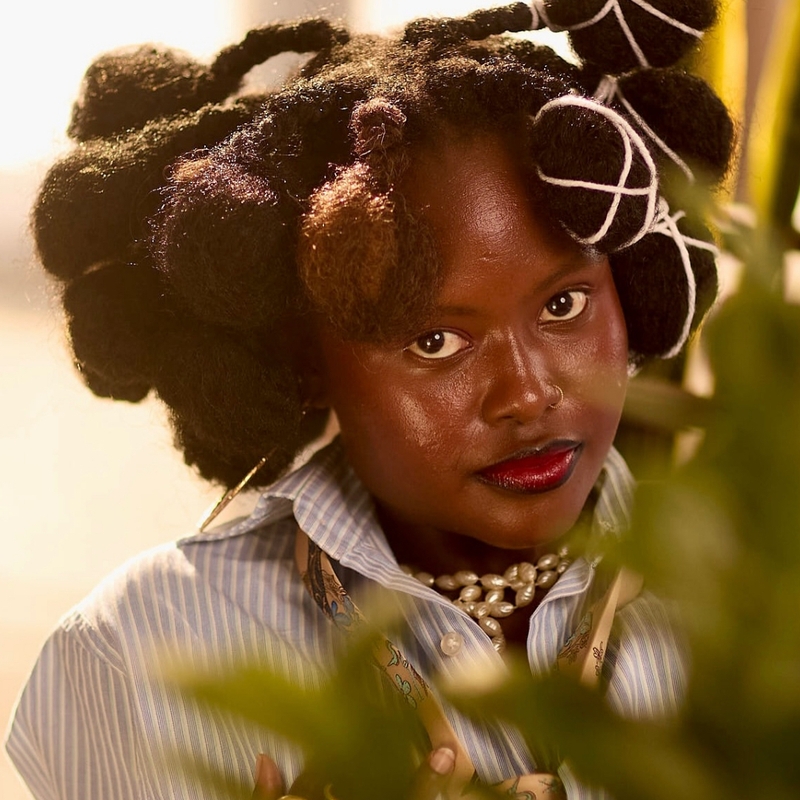
From Embu to Nairobi’s creative scene , Melissa finds her footing slowly through fashion, producing, creative direction and law and her first projects have been quite remarkable. From working behind the scenes with Bien, King Kerby and Nikita Kering among other artists to producing short films with Buggi, Melissa’s influence is slowly but surely taking over. I got the chance to dive deep inside her creative mind and here’s what may be an introduction to some and to those who already know her a better understanding of who Melissa is and where she’s headed.
What aspect of your life growing up really shaped your creativity
I'd like to say that I read a lot of books. My mom's a teacher of English so I started reading books at a very young age and also just being exposed to TV but besides that just my parents letting my imagination run free and getting into arts when I was in primary school and I wrote a lot back then so it was just about letting my mind run free on the paper. I am a last born as well, so I spent a lot of time on my own, talking to myself and you know just making things up. If you’ve watched the Bridge to Terabithia I was a lot like that little girl. I think it's small aspects that lead you down the same path. It got harder as an adult to let my mind wander, especially living a corporate reality, so being part of the industry is a good outlet and reality for me because it grants the same freedom in some ways.
What was the moment that you knew you wanted to dive into the creative world
Honestly, last year because I didn't think in Kenya people could earn money from the creative space. During COVID I used to do a lot of styling videos and put them on the internet which did well at the time but when I found out that people actually make money from styling, designing sets and producing; and that there's a whole industry that’s heavily untapped, I was quite intrigued. Creativity for me was always just a way of expressing myself. It was never about the money but being able to make a livelihood out of it is really encouraging like involve me please! It has also always been about the things that caught my eye like billboards and advertisements. I wanted to know how that worked and it drove me in that direction. I thought, maybe, I could be on a billboard and then now I ended up producing stuff that ends up on billboards .
How do you believe you have grown being in this space?
The space in Nairobi is very dynamic. There's a lot of things people want to say with words that you have to decipher through actions. What I have learned from it is that as much as the industry is about collaboration and relying on each other you need to be able to know as an individual that nobody owes you anything. Even if my friends are the best editors and photographers in the world there's only so much you can do for free because people are doing it for their livelihood.
Also learning that the way people get selected for projects is really about your portfolio or how long you've been in the industry but if you're new you'll rely on your allies to fix you in certain projects but you can't build resentment if someone doesn't do that because at the end of the day you're not the centre of everyone's universe. It’s been a process of learning that people can help you on the way and propagate you in the right direction but it's not anyone's job to tell you that you need to do this and when you're on set you need to learn how to handle different personas and how to respect other people's careers while you're on set because it's very informal.
Fashion has been one of the ways that your creativity shines. How would you describe your style?
I grew up in Embu and my parents are very conservative most of the things I liked, for them, they thought were indecent and I was also blessed with a curvy body from a very young age which proved itself problematic. It took me a while to unlearn these things and also to learn what actually looks flattering on me. Most girls can wear certain items but for me, it was a lot harder. However, now, I have built confidence and a style that I like. It also helps that I don't live with my parents because it's hard to build confidence while constantly being critiqued. I love my parents and I know it stems from trying to protect me, you know, but still it held me back in different ways.
But my fashion sense was really shaped by Strathmore. When you have to wear western business attire for three years straight, you have to find a way to make it fun. All my clothes were either official clothes or clothes for going out so when I finished university it was really hard for me to curate a wardrobe because the only thing I had was funky pants and like half-coats. All my shirts were official. Later on I started gravitating towards earth girl vibes because I feel I resonate more with nature and I like the pastels. I'm also just a maximalist and I'm slowly curating my jewelry because I didn't wear much of that in school. I wouldn't say anything has influenced me but I am on Pinterest a lot. If I see it and I like it I do it. I do, however, have Kenyan creatives that I do like like Mantoi. She's really taught me confidence especially when I open my TikTok and I see her wearing a really mini top and low waist jeans and her body looks good and nobody's trying to tell her to cover up. I'm like if she can do it I can do it too.
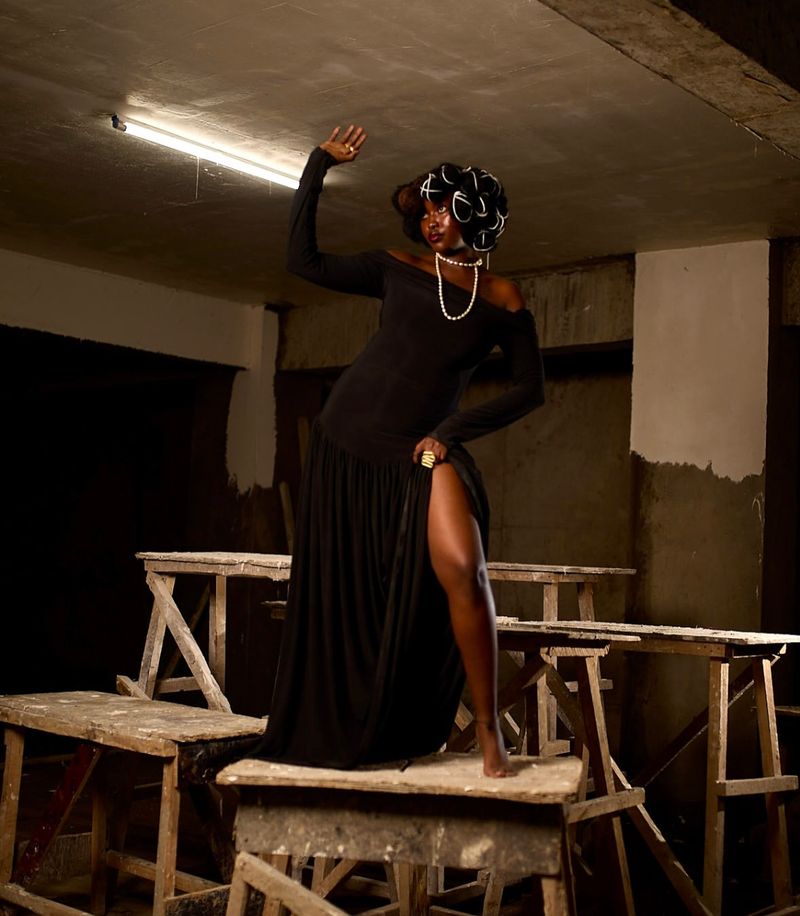
Now your hair! You started doing a bit more Afrocentric styles recently so what was it that made you be like, “I want to start doing my hair this way...” and how do you think that has kind of shaped your creativity and kind of built your creativity more.
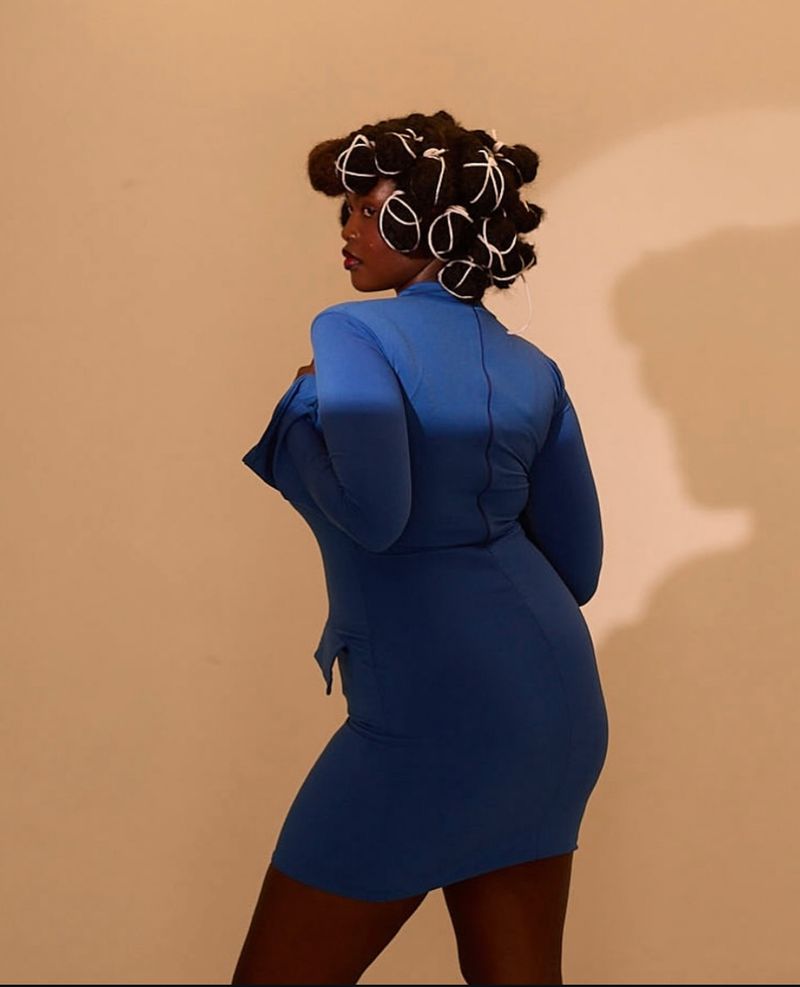
The schools I went to were all boarding schools and I either did lines or braids for at least 15 years. When I became an adult I started wondering if this really works for me. As a round-faced girly, the knot-less braids were not working for me and my hair texture also wasn’t easy to manage. When I saw that the hairstyles that were trending didn't work for me, I started looking into cultural hairstyles to see what Africans were really about and the more I did a deep dive into it the more I was like wow, Africans are artists. That’s when I decided I'm never gonna stop because there's so many things we need to try. Anyway, my saloonist is amazing and can do anything which helped, and my family just accepted me and started calling me a rain maker of sorts
I feel like a lot of our culture has been erased by colonization and even just by being in school the idea you need to straighten your hair or shave your head to be neat is not true. There’s a lot of African hair techniques like threading , Tanavoho braids , Korobo braids and even ornamentation which are so beautiful. I know a lot of these hairstyles are done for editorial purposes but I feel like it's really cool to have it as everyday hair because that's what it was intended for. Going back to the beginning has helped me find myself a lot more and I don't really care what people say. When I walk down the street I'll hear people making comments, it's never really negative it's more like shock. yeah like hey madam but I feel like it's good to expose people, I'm really happy to see Afro-centric styles trending and slowly but surely African girls will start being confident in doing African hairstyles because literally you look so much better, because that's who you are.
How did you get into producing?
Last year after I graduated. I went on set, first as an assistant director, but I slowly realized that the assistant director and producer roles tend to mix. I learnt that there’s a lot that needs to be done in matters scheduling, planning and finances. Most people don't want to think about that but for me that came easy because these are things that I learnt from quite a young age through my family and experiences I had especially in school. I found it interesting because it's easy to do in my opinion and if you have a client who knows exactly what they want it's easier for you to help them. Producing should be something a lot of people look into. I wish I started that a lot younger because the money it paid me when I worked in a production house was not what I imagined at all.
What was it like doing your first ever project?
The first project was also my biggest project. I did the music video for Bien and I was really nervous. It was very nerve-wracking because we didn't have a lot of time. At the time I also didn't know what the title producer was, I just knew that we were being allocated funds and I had to do the tax calculations and find out how I'm gonna pay everybody. It was a lot, and if you're a person who overthinks things, you end up factoring in a lot of things.
It was really nerve-wracking so I don't think I'd do it again, though I also feel like when you're working with seasoned artists like I've experienced, it's different for them. The first thing he told me was he doesn't like to do music videos which didn’t fill me with confidence because it's gonna be a long day, you know. So trying to manage the emotions can be intimidating. You don't really know what to tell this guy because he's my senior, I'm a huge fan of his music and this is a very serious project where people are paying a lot of money. So it's just a lot , emotionally. Personally, I don't think I'd advise anyone to go that big on their first project as a producer. Learn slowly and then you'll be able to handle things better as you learn.
How has the community around you shaped this journey for you?
First and foremost, my brother is a photographer and a drone pilot. He's always been in the art space and I was jealous because, “how come he can do that and I can't?” Ilibidi nimejifix. It also helped that a lot of my friends were also leaning towards the creative side. My friend Heri is an editor and there’s Stephanie who loves to take photos and model. There’s also Nitakacho who is a set designer and I have worked on so many projects with . I think it's easier to surround yourself with people who understand what you want and what your goal is, because most of my friends from law school would not have understood that I didn't do an internship the whole six months after I graduated just to make videos. To them, that doesn't make any sense. If you are a creative person and you're looking for a creative outlet, I advise you to surround yourself with like-minded people. For one, I stopped going to mainstream events. I started going for more events which are created for creators by creators and slowly but surely you start feeding off of people's energy. Just being around artists helps to show you that, number one, you're not crazy for dressing the way you want and doing the things you want, and it's also encouraging to see that you're not alone.
As a creative director what are some of the challenges that you have faced?
Number one is resources of course . Some things are very difficult to execute if you don't know the right people or possess enough information, which is my second point, lack of information, which can still be drawn back to resources. Creative blocks and imposter syndrome, as well. Most of the things I want to do as a creative director I don't think I have put out in the world yet because there was a lot of self-doubt; which really kills your creativity because if you also try to over rationalize some things it's just not gonna flow .People can also make you feel like you are not good enough or you don't know what you are doing. I know some things do come with experience but no one should police your creativity. It's ok if it doesnt make sense to them but that shouldn't shift your whole direction.
Another thing is different directors work differently. When I was working as assistant designer for the Mabati Rolling Mills commercial, we met a really great director from South Africa called JP. He was very specific about how he does his thing, otherwise he's not gonna shoot, meanwhile, there are other directors who are a bit more lenient. At this stage, coupled by the fact that I’m not that well known in the industry, telling people what to do on set as well can be a bit uncomfortable, you know. People don't like to be told what to do. I mean it's different for different artists because there's some people like Nikita Kering, who need very little direction. Half the time you don't need to tell her what to do because she's a very good performer and she will put herself out there but there are some people who are more closed off when they get on camera, so they could be a bit awkward.
Which project have you done that has really changed your perspective?
I don't think I have a favourite project because most of the work I've done is a lot of firsts for me. Every set taught me something essential so that for me is really special. Though I’d say the Mabati Rolling Mills commercial definitely changed my perspective. Seeing how we were on set for five days for a commercial that was only one minute long. The crew that was there.. Oh my goodness! I'd never seen a set up and set down done that fast. They were so professional on set. There's nothing I love seeing more than creatives in their element, so when I was on that set, specifically, it was the most professional set I’d ever been on, which made me feel like that's what I want to deal with. However, the reality of things is I don't choose. Most of the people I work with will be my age and most of them are probably even my friends so I feel like there's some lines that are hard to draw when it comes to instructing someone who's your friend in a professional setting, because if I’m the creative director and you're the art director, we will end up in conflict from time to time, you know. But it also depends on the person's attitude. If you find friends who are professionals that you can really work with, why not?
You’re currently in law school, how was this influenced your creative side
I think it's the other way around. The creative side has influenced the law side of things for me. It really wants me to get into things like copyright and trademarks for artists but besides that, working as a creative when you're new to the industry makes you realize how much people are being mistreated. People don’t understand how contracts work. People get paid peanuts because we don’t have standard laws about how much artists should be paid and production houses are taking advantage of people. There's just a lot of things about the industry that haven't advanced and trying to just use the law side of things to streamline the industry, I feel, would open it up to a lot more for younger creatives who are trying to make a living from this industry.
You’ve also started working as a set designer, how do you hope to grow from here?
When I started venturing into this industry the first thought I had was ‘I could be a stylist’ until I found out how much work they have to do sourcing things which is literally the same as a set designer. I wouldn't do it because I don't think I have that stamina. It has elements that I’m interested in like color theory and just general interior design. I do want to understand things on a basic level so it can help me from the creative director and producer perspective. It was a very good experience though, because I got to know what these people go through and how much time it takes. I feel like some things you just need to do in order to know how it works.
What projects do you want to work on in the future
I am currently reading “The Creative Act” by Rick Rubin and something I've picked from the book is ‘that when an idea comes to you it's not that you're special it's just the idea’s time to come to life’. I don't know if I'm going to work with artists in the future but I am very interested in diversifying the reality TV space in Kenya. I feel like we don't have anything to watch these days. I grew up on DSTV and I feel like we had so many things to watch on there. These days, most, if not all of it, is love centred. However, there's so much more that happens to people in their adult life that I would want to put in a memo and re-enact. Like Awkward Black Girl on YouTube, but from a Kenyan perspective. I feel like we don't have enough shows to guide our own people. We need to have shows that make sense to us and our experiences. We've only tapped into a really small space when there's so much we haven't done, and considering how fast the industry is growing, some of these things are definitely possible and hopefully I get to be the one to do it and you’ll definitely see me moving and growing.