in-conversation
in conversation with Sukuma.Wiki
by Muthoni Kariuki
December 15, 2025
in-conversation
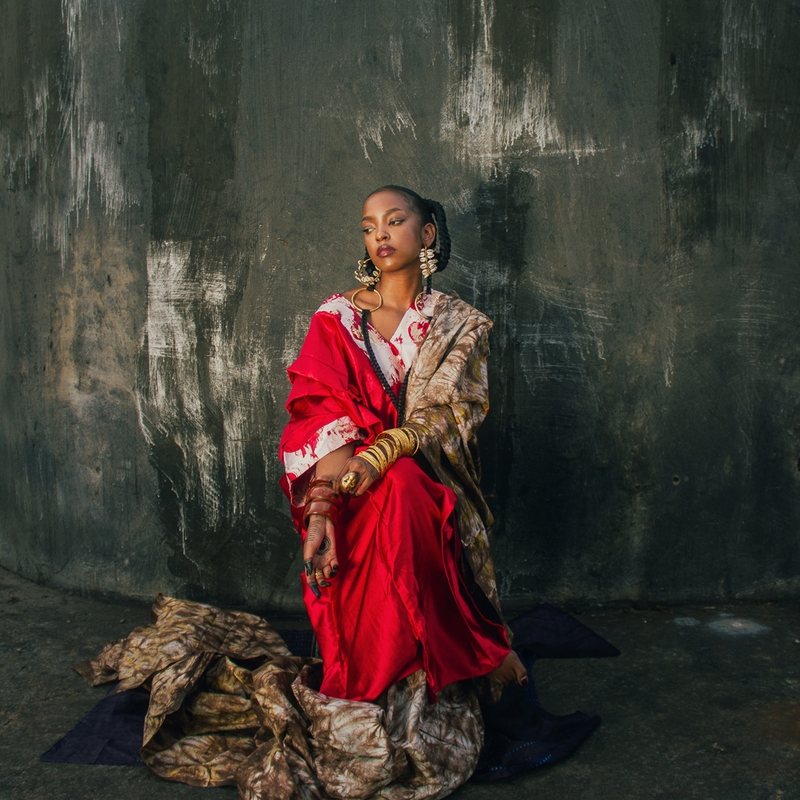
Muthoni (Sukuma.wiki) is a multi-disciplinary artist from Nairobi, Kenya. She dabbles in a number of mediums from painting, to fashion photography to sculpting and so on and they all interconnect in one way or another.
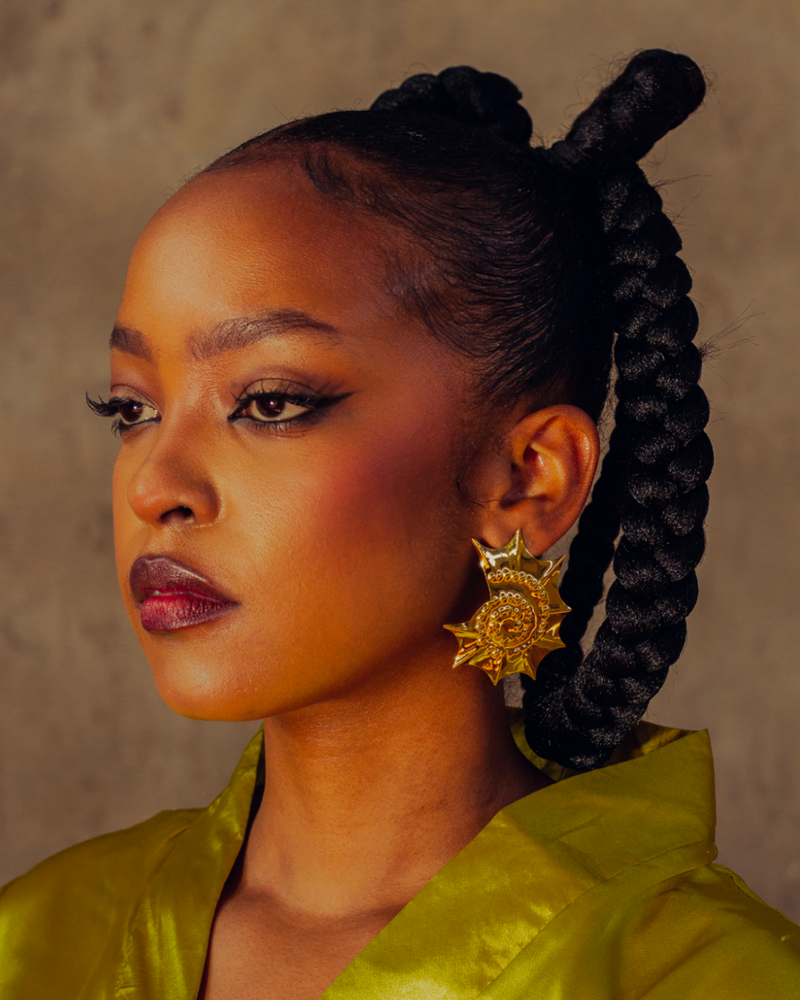
“So there's Sukumawiki, the visionary, the creator, the artist, the Pan-Africanist. So everything that I need myself to be, but sometimes feel afraid, that's where she is. “
I had the pleasure of sitting down with her over a cup of tea and got to know her a bit more and here’s a little bit of how our conversation went.
So First, where does the name “SUKUMAWIKI” come from?
Sukumawiki for me is an identity I created to be the person I want her to be. It has many influences. When I was in high school, I was under the tutelage of an artist called Patrick Mukabi. When we were growing up, in Java (editors note: Java House), he used to have these paintings of really plump women shopping in the market. He's a renowned force in art in Kenya and I worked under him at the Go Down Art Center.. While I was there, I noticed people were calling him Panye and I was like, what's up with that? He told me, you know, you actually don't have to use your real name. You can be whoever you want, and then coincidentally, literally outside the studio, there were plants growing and one of them was sukumawiki (Kales) and I thought that would be really cool.
Then, there's a podcast called Make Art, Not Content that I used to listen to and the author talks about the importance of the alter ego. Then also there's an artist called Syowia Kyambi who had this exhibition called Kaspale a few years ago that used masks. So she created another identity, Kaspale who describes Kaspale as a protector, a provider and a mentor. She created this identity that could do the things she couldn’t. That kind of solidifies the role of the alter ego to a creator, to an artist. They can do the things that you feel you can't or are not empowered enough to do. So that is what Sukumawiki is to me. And it’s the same for the mask iconography. If you think about it, masks have historically served various purposes, especially in African anthropology—whether spiritual, ceremonial, or even as rites of passage. So they just create a different identity. And that's where the mask iconography comes from for Sukuumawiki.
Growing up, what influences did you have that introduced you to art?
I was born in Mombasa, and then grew up in Malindi. So I was immersed in the dichotomy of indigenous African society, which included the Giriama, the Mijikenda, and Swahili culture as well. There's so much visual identity that comes from those two. Obviously, Swahili culture is synonymous with henna art and everything. Giriama culture has the costumes, the lesos, the kangas, the detail in the fabrics, the sculptures, the masks. Aside from the visuals, the song, the dance, the ceremonial rituals, the food. The coast has so much culture and architecture. It's really difficult to be surrounded by so much visual stimulation and not be kind of inspired in a way. So I've been drawing, painting for as long as I can remember. When I was young, I used to draw on the walls. My mom used to get so pissed, but, you know, sorry mom, and I used to try to do henna art on myself and my friends. That environment solidified the kind of artist I am today, which is very inspired and also like someone who wants to give back or make a huge reference to African art and African culture, because that's all I saw.
For me, Swahili culture is like a great example of the melting pot that Africa is, because you can't really group African identity or African art or African culture into one thing, but there's so many ways we intersect. So even when you look at Swahili as a culture, it's an intersection of many things. Obviously, there's like the Arab trade. There's an Indian influence, and then there's an indigenous African influence. Sometimes you even have aspects of Portuguese culture like the architecture. There's so much that goes into it. And for me, it's perfect. I can conflate it with my idea of the African identity. So it's not one thing that really separates us, but there's so much that brings us together.
What was the IT moment in your Art journey that you knew this is your path?
I think I'd compare being an artist to a fish in water. You can't escape it. It's just, you need it to survive, honestly. It's something you think about constantly and as much as you try to run away, it finds you. So I wouldn't say there's been IT moments that influenced or made me decide. I think as a creative person, you always know. It like a calling. Like how priests feel called to take the vow. Something is in you. It's almost predetermined, I think. That's how I feel about it.
How has the community you’ve built as an adult helped you in your artistic endeavours?
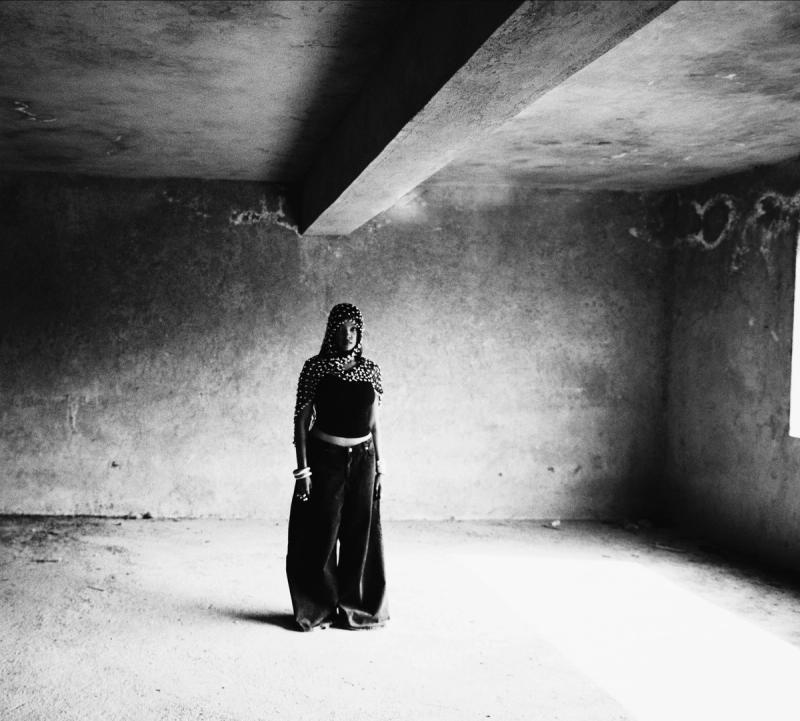
I'd be happy to say that the community found me. I didn't find them. Everyone I meet, everyone who is around me and who's been with me throughout my journey and still continues to be are people who you stumble upon along the way. It's like when you're on a ship and you find a lighthouse. That's kind of what my community feels like to me. It's also people who are like-minded or who share the same beliefs, share the same values, and then also share the same appreciation for the things that you do. So in my case, that definitely has been something that resonates with me.
I think when you're authentic, you'll find similar people. I like to say that out of 7 billion people, you can't be the only one. So you always find people who are similar to you, and you can't fake your way into it. I feel like if you're inauthentic, that shows and you're unable to release. But if you're genuinely, intrinsically who you are, I think that's something people resonate with and are drawn to.
You work with a number of different mediums and disciplines. How would you say your practice has changed over time ?
There's someone who said that growing up is basically just trying to go back to who you were as a child. So I think my practice has changed, but not really. It's cyclic, you keep going back to the things you used to do. For me, the evolution is most evident in the change in disciplines, for sure. Because I started out as a traditional artist, which means you use traditional tools of art, like painting, drawing, charcoal, sketching. Later on, I found myself exploring sculpture and more physical forms. Now I see now diverting into other forms of visual art, like film, photography, and things like that. But then if I think back, when I was younger, I used to sew and make my own clothes, and now I'm doing fashion photography and fashion films. Plus I always carry a camera, and now it's different, but not really. It's literally not a line, it's a circle. I think there's an appreciation of a wider array of disciplines. But if you think about it, it's always been there. It’s just like coming back home.
Whenever you’re taking on a project what is the core of your creative process?
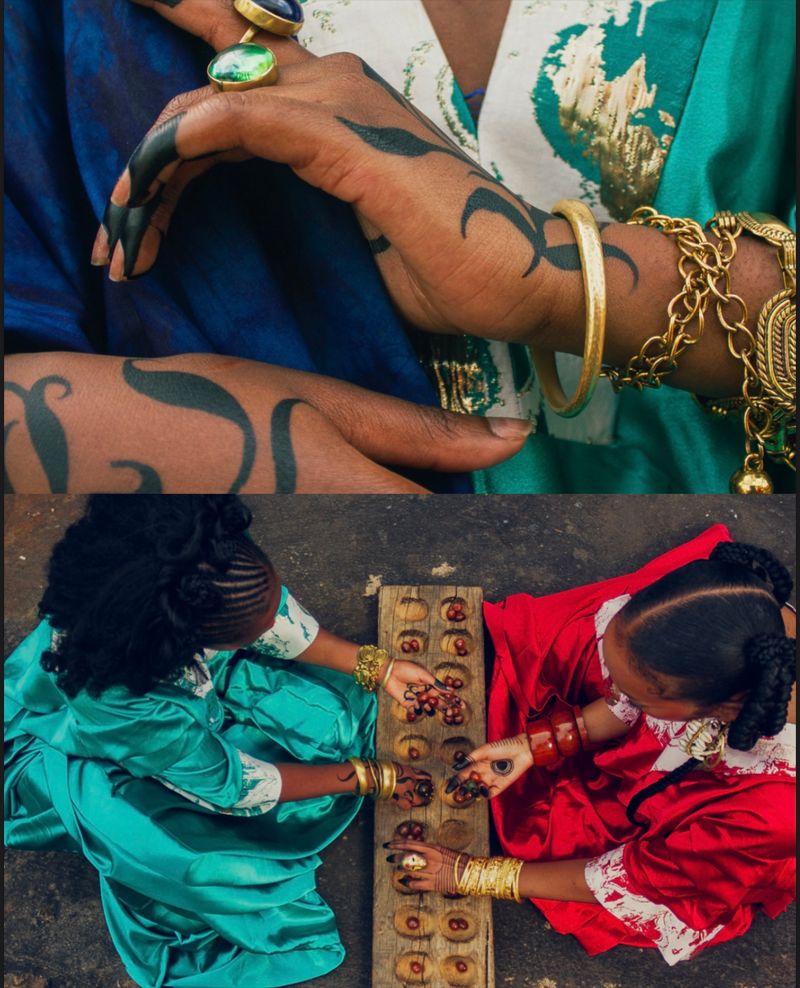
I think this goes back to my ethos; why are we creating in the first place? Personally, as an African, a black indigenous African, Africa is always at the core of my being. If there's one goal in life it is to make sure that every African person is proud and is just … inspired. Inherently just this sense of belonging when it comes to Africa, African people and African culture. So I guess when I'm creating, that's always at the core of the project. How can I now relate this to what I aim to do? So even when I’m thinking visually, it always ties back to the continent. There'll always be certain elements you'll find in each of my projects or an aspect of research that goes into it. Like, how can I bring this out in a way that is uplifting but also makes sense historically. So to answer your question, at the core of my creative process is always going back to our continent. So that's the starting point. And then I build up from there.
When people see the work that you put out, what emotions do you hope to invoke?
I mean, if everyone could just be gagged. That'd be great.
But I think again, it's the sense of pride, acceptance and belonging, especially for African people. Outside of that, I think obviously you want it to be visually appealing. I know art is subjective and I know sometimes people won't always understand the message.So, if it makes you think, think that's great for me. Whatever your thoughts are, just think about why it is the way it is? What is the artist trying to bring out? Because, a lot of the time, my art is whatever it means to you, and that kind of like invokes something within you. It makes you introspective, makes you think outside of what you'd usually think of at first glance. But definitely, again, at the core of my art is Africa.
Sometimes I do work within different subthemes. So I integrate my core values into my work whether it's feminism, anticapitalism, Pan-Africanism, social acceptance etc. All of those things intersect and that's why I want the work to be introspective. Think outside the norms that we have now and imagine what society or what the world or what certain areas of life could be outside of what we are taught to believe now.
What part of your personality do you think shines out in your artistic work?
First of all, Sukumawiki definitely shines and her identity is much bolder and outgoing and confident. In my work, that personality comes out. It's unashamed, unambiguous. I think if you see my work, it's very clear to see where I stand on certain things and sometimes there’s a running theme. And that unapologeticness is what kind of flows throughout. It's like, it is what it is and that's what it's always gonna be.
On the collaborations that you have done, which one was your most memorable and what did you learn from it?
There's a number I've done which I'm really happy about. One of the first ones, which I like as a core memory, was a collaboration with my good friend Ed Wainaina who's a visual artist as well. There’s also Dennis Mwangi who's a filmmaker, photographer. We worked together in 2019 or 2018 I think. It was a video on Ed’s rooftop and it was the whole reason we started doing films based on art. That was one of the markers of like, okay, this is the direction we're going.
Then more recently, there's a shoot I did for the brand Kauwri, it was shot by Matthew Matete. Kauwri is owned by a friend of mine called Victor. Matthew is also a good friend. Both incredible artists. And I think for me, this was when I was really and truly given full creative control which I was quite happy about. I was able to bring out all the aspects of where I want my visual identity to go and then going back to my ethos. I'm grateful to them for trusting my creative direction.
You’ve recently started Ukombozi Social with your friend Mtazamaji, what influenced it and what do you hope for it to become?
Ukombozi is a social club for liberated people. So we're building a community of like-minded individuals. As I said, your community finds you. We're just trying to bring together people who are like-minded, curious about the same things, who share the same beliefs so that you don't feel like a lone island in a body of water. There's people like you who exist especially in Nairobi. Ukombozi means liberation, and the point of liberation is to make you think outside the box and outside the norms we are taught right now. To liberate the mind, especially. So what are we taught about things like capitalism and how we treat people who are not like us? How can we think beyond those stereotypes and make sure we're just human beings? So that's what it is. Then we integrate that point of view, the art, culture, music, food. And this all ties down to Pan-Africanism. So it's a club by Africans for Africans, but of course everyone's welcome to join. So if you like any of those things and this resonates with you, Karibu Ukombozi.
What challenges have you faced navigating the Artistic world in Nairobi?
The financial bit of it has been somewhat tricky to navigate because as a creative person, you just want to create all the time and not think about those things. If it was up to me, I would create for free all the time. There's so many projects I've done for free. There's so much of my art that I've been given away for free. But at the end of the day, you do need to make a livelihood from your work. You have to come down and think about it and be like, okay, what are we gonna eat now? So that's definitely something that has been tricky to navigate.
Other than that, honestly, I'm really inspired by the art community right now. I feel like creativity and art in Nairobi is in a renaissance. Not only in Nairobi, but in Africa. I feel like artists are just breaking through everywhere. There's so much to see, so much to do, so much to be inspired by. And the community is generally very welcoming. So I really don't have much to complain about. But you know, pay creatives!
What’s one thing that you could not live without
If I was in a burning building, I'd take my jewelry. I'm sacrificing my life for my jewelry. But actually one of my greatest fears is developing cognitive disorders like Alzheimer's. I feel like losing my mind , my brain and losing that cognitive process is something that's truly terrifying. But my jewelry for sure. Also, tea. I love tea.
Who/What is your dream collaboration?
Someone I'm really, really inspired by is the artist Wangeci Mutu., I don't even need to collaborate with her. I just really want to be mentored by her. Just go into her thinking process and learn her creative process and even skill wise. To work with her would be even more insane. Photography wise, I've always wanted to work with Mutua Matheka, Truthslinger … Although we might have something coming up soon. So hopefully, fingers crossed.
Outside of Africa, recently I've been really, really inspired by Gabriel Moses. And his work, especially with fashion films and he's been doing music videos with different artists. He recently did a music video for Travis Scott and I think he's doing one, or did one for Pusha T. He's also worked with brands like Corteiz and with Kanye West. I mean, and he's what, 27? So, working with him would be so crazy. If I could just like, have some sort of input and have his skill on a project, that would be insane.
Where do you hope to be in the future as an artist?
I genuinely believe I'm on the right path, but the journey is not linear because for me, I don't have too many ideas of exactly who I want to be. So I have different influences and I can put them together, but there's no direct signal of like, okay, this is exactly who I want to be. I think if I'm fulfilled in every aspect of my life, then I'm happy. So what I would just want in the future is a sense of fulfillment and pride with what I've done and what I've managed to achieve. If I can stick to my core values through time, that's great. If I happen to be the next Basquiat, even better, you know?
What legacy do you want to create with your art/life?
There’s the Senegalese filmmaker, Osumene Sembane, who says why would I create for Europe? Europe is not my center. That deeply resonates with me because why would I be a sunflower looking towards the sun when I myself am the sun. If I can invoke that in people, because that kind of gives you that African sense of pride. We are called the dark continent which is crazy to me because we are so full of life and culture and art. I mean, life came from Africa, and for too long, even growing up, we looked to the West so much for a sense of acknowledgement and I think for me, it's time. I'm happy that the movement has already started. Where we ourselves are like looking within Africa for inspiration and for appreciation and for acknowledgement. It's a very cathartic feeling and I think I'm just lucky to have found a sense of purpose. If people can look at my life and look at my work and feel that, I think my work on earth is done.