writers-pit
Rhythms Across Borders: How Goethe MobiArts is Rewiring Intra-Afrikan Mobility
by Ngina Mualuko
November 03, 2026
writers-pit
For decades, the standard blueprint for an independent Afrikan artist seeking international acclaim followed a familiar, contradictory path. To perform in a neighboring Afrikan capital, an artist often has to route through Western Europe or North America first. Physical borders, complex visa regimes, and fragmented touring infrastructure routinely separate creative communities that share deep cultural, rhythmic, and historical ties.
The Goethe MobiArts initiative was conceived to disrupt that exact paradigm. Program directors like Raphaël Mouchangou in Cameroon and Alexandre Dieu-Donné N’zi Kouassi in Côte d’Ivoire emphasize that MobiArts is a strategic framework for continental integration. Over three years, with nearly fifty performances across Sub-Saharan Africa, the initiative has enabled a dozen artists across various disciplines to cross borders, enrich festival lineups, and reach entirely new audiences. As Kenyan rap and slam artist Checkmate Mido observed after his own tour circuit, being able to connect with diverse continental audiences fulfills a long-held dream for independent creators, demonstrating that mobility is a primary driver for artistic development.
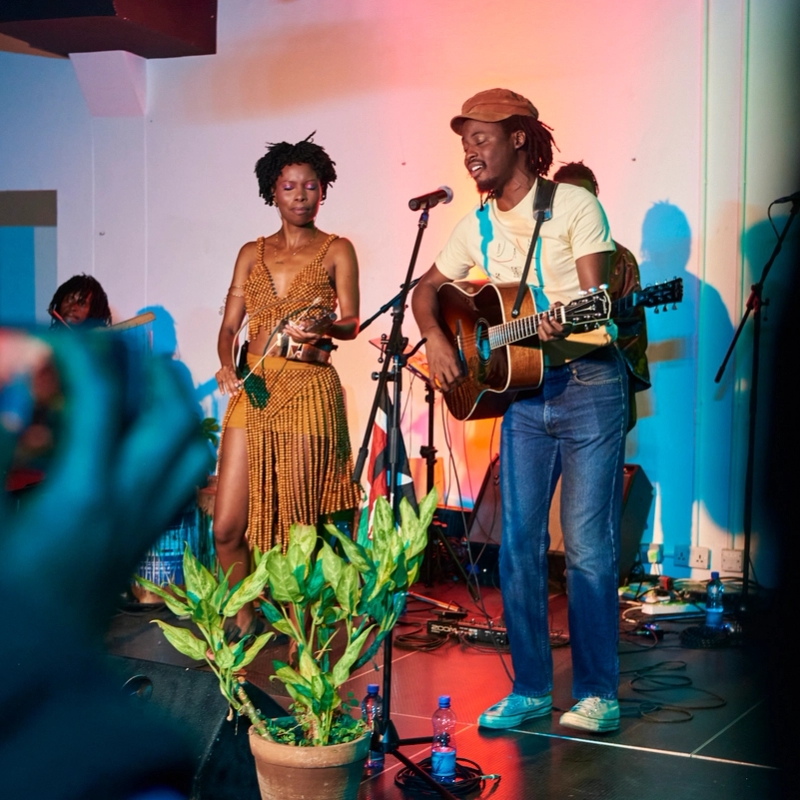
To understand what this movement feels like in real time, I sat down for an online conversation with two creators currently navigating this circuit: Labdi , the Kenyan singer, producer, and rare female player of the Luo orutu, and Tommy WÁ, the Nigerian-born, Accra-based acoustic-folk nomad. Sitting across screens, our dialogue unfolds naturally, revealing how touring Afrika directly isn't just a career milestone, but a political, sociological, and deeply personal reclamation.

Heritage, Memory, and the Spaces We Reclaim
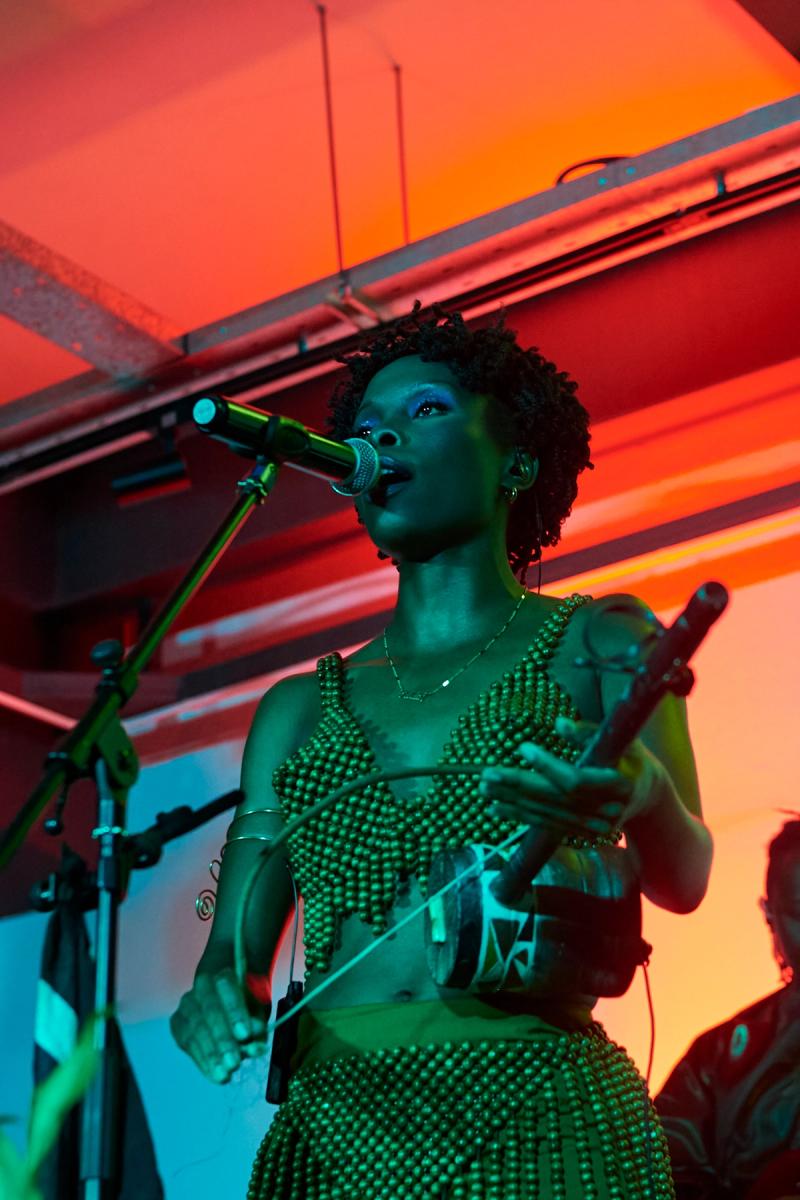
Labdi plays the orutu, a traditional single-stringed Luo fiddle historically reserved for male elders, while Tommy WÁ plays warm West Afrikan indie-folk guitar they immediately reveal two artists anchored in profound cultural memory.
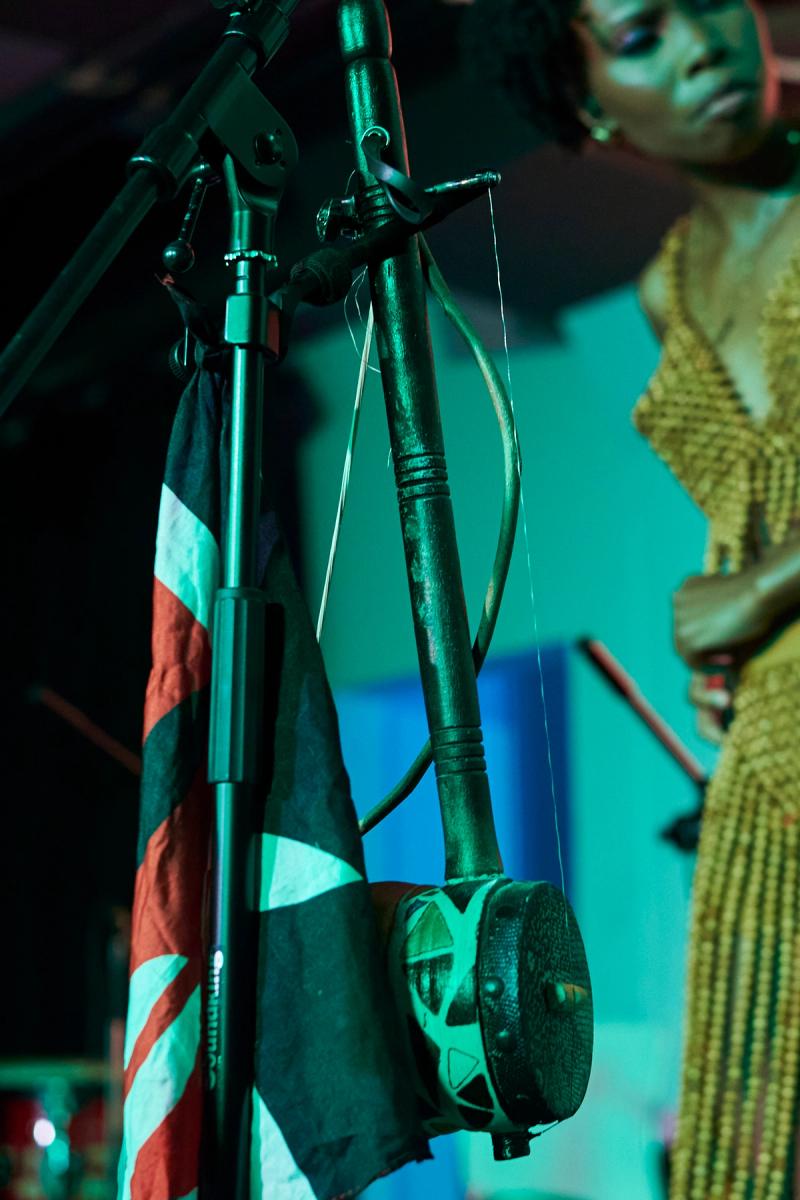
Labdi reflects openly on the gendered history of her instrument, admitting that she sometimes forgets the single string was never originally intended for women. Standing on contemporary stages with the freedom to create and play is a point of privilege her great-grandmother’s generation was denied. For Labdi, picking up the orutu is an act of research, curiosity, and honoring ancestry. Whenever she lands in a new city, that curiosity becomes a bridge. During her tour stops in South Afrika, she asks local musicians and historians if an equivalent instrument exists in their traditional archives. Finding none sparks an immediate dialogue between two distinct cultural traditions, demonstrating how sonic heritage can unlock genuine cross-continental conversation.
For Tommy WÁ, that cultural anchor is found in geography and the nomadic pulse of West Afrika. Tracing his roots from humble beginnings in Ibadan to his creative home in Accra, he describes Nigeria as the pulse of his sound and Ghana as the veins carrying that blood. Moving to Ghana was an epiphany, he says. A calm, grounding space where his acoustic folk can take its true shape. That grounding gives his music a distinct sociological edge. To Tommy, art sits right at the intersection of politics and sociology. While textbooks offer rigid descriptions of these systems, bringing music into the conversation gives those ideas a lived, human purpose.
As both artists move across regional borders, Labdi traversing East and Southern Afrika, and Tommy connecting West, East, and Central Afrika, they arrive at a strikingly identical realization: touring across the continent requires going into new spaces completely open.
Tommy describes this as going in empty so that you can be filled by the experience, allowing local encounters, jam sessions, and the community to actively reshape you. Labdi finds this exact philosophy at play when performing in Dholuo to non-native audiences and collaborating with a brand-new local band in South Afrika.
Singing in her native language outside East Afrika transforms her performance from mere spectacle into a shared educational encounter. Without the pressure of being over-analyzed, she leans into being a teacher, taking time to explain the stories behind her lyrics. It forces her to slow down and be intentional, which paradoxically creates a far deeper connection with her audience.
That dynamic extends directly onto the stage. Navigating South Afrika, a region she fondly describes as the singing capital of the world, highlights a sharp cultural shift. Where East African audiences often view a performer strictly as someone hired to execute a show, South Afrikan audiences are deeply interactive, turning performances into a two-way conversation. Performing with a local band requires Labdi to be a student as much as a teacher, surrendering to their sound so the orutu wouldn't just sit on top of the arrangement, but blend into a single, cohesive identity.
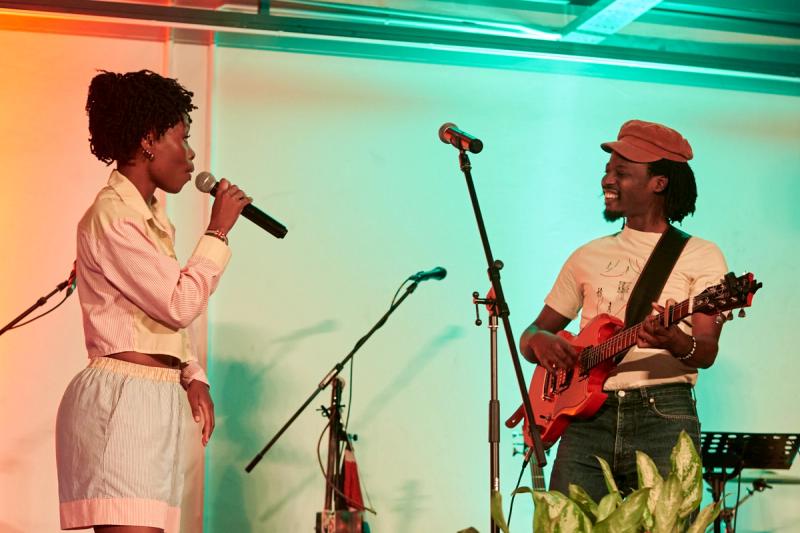
The true magic of intra-continental mobility lies in what happens when two distinct sonic worlds collide. During the tour, Labdi and Tommy WÁ step into studio sessions together, bridging East African traditional instrumentation with West African acoustic folk.
Tommy feels an immediate sense of purpose in these sessions, observing that music possesses a unique power to cross borders without administrative permission. Labdi agrees, noting how inspiring it is to bring her traditional Luo background into Tommy's indie-folk world. The collision shows both of them how vast creative possibilities become when Afrikan artists connect directly with one another.
Yet both creators are quick to point out that these encounters highlight the broader structural work still needed across the continent. Travelling between Afrikan countries remains notoriously difficult, with complex visa processes and logistical hurdles creating artificial barriers. Tommy points out that initiatives like MobiArts are critical because they do more than host single concerts. They actively build the touring ecosystem that Afrikan artists desperately need.
As Labdi notes, this movement exposes a glaring gap in the Afrikan music market. While global headlines constantly celebrate "world tours," those circuits almost entirely bypass the Afrikan continent. MobiArts proves to artists and industry stakeholders alike that the demand, the talent, and the audience exist right here at home.
As their respective tour legs press forward with Tommy looking toward Burkina Faso and Labdi preparing for her first visit to Nigeria, both artists share a unified vision for what Afrikan creators must cultivate moving forward.
Facing audiences across different regions forces artists to look inward rather than constantly seeking validation from the outside world. Tommy’s message to the next generation is centered on clarity of intent: never stop, find your purpose, and trust what we already possess as a people.
For Labdi, the blueprint is anchored in community, ethical collaboration, and sustainable systems. Art cannot be created in a vacuum, and her goal going forward is to establish collaborative frameworks across the countries she visits. Systems she can easily return to long after the tour bus stops.
Through the Goethe MobiArts Tour, the single string of the Luo orutu and the warm acoustic chords of West Afrikan indie-folk are doing far more than entertaining crowds in Nairobi, Kigali, Johannesburg, and Accra. They are actively mapping out the future of Afrikan artistic freedom, one border at a time.