writers-pit
DEATH TO PANEL TALKS
by Keith Mukiri
September 07, 2026
writers-pit
“Creatives love listening to the sound of their own voice. It’s not a bad thing. It’s not a good thing. It’s just true.” The words just came out of me as I was talking to my friend at a creative panel talk. Actually, I’ve said it more than once. Before I am hung at the gallows by some and applauded by others over these statements I’d like to elaborate from the lenses that precipitated these feelings.
As a creative, expression has always been a desire that burns and riles within me in the same way that my human appetites burn when they desire to be satisfied . I think it’s because expression in itself is also a human appetite; an appetite that deserves fulfillment within healthy reason. However, growing up, expression was an appetite that I was taught at a very young age required repression not satisfaction. I was taught to understand what few feelings and opinions I could express fully, which ones required partial expressions and which forms of expression required culling completely. My world was ruled by suppression over expression.
Naturally, outside of the purview of my parents and teachers, whenever the opportunity for expression revealed itself I would go above and beyond to make them known and heard. This was, in and of itself, an overcorrection I had decided to make and maintain in my life, promising myself that I would not be silenced or managed in how I communicate and respond to life and my inner world, regardless of the implications or consequences my expressions would have on myself or others. “I shall not be silenced nor censored!!!” I’d think to myself. Of course I quickly learnt that overcorrection can bear its own unique difficulties. So just like any other human appetite, I had to learn how to satisfy their urges within a healthy metric.
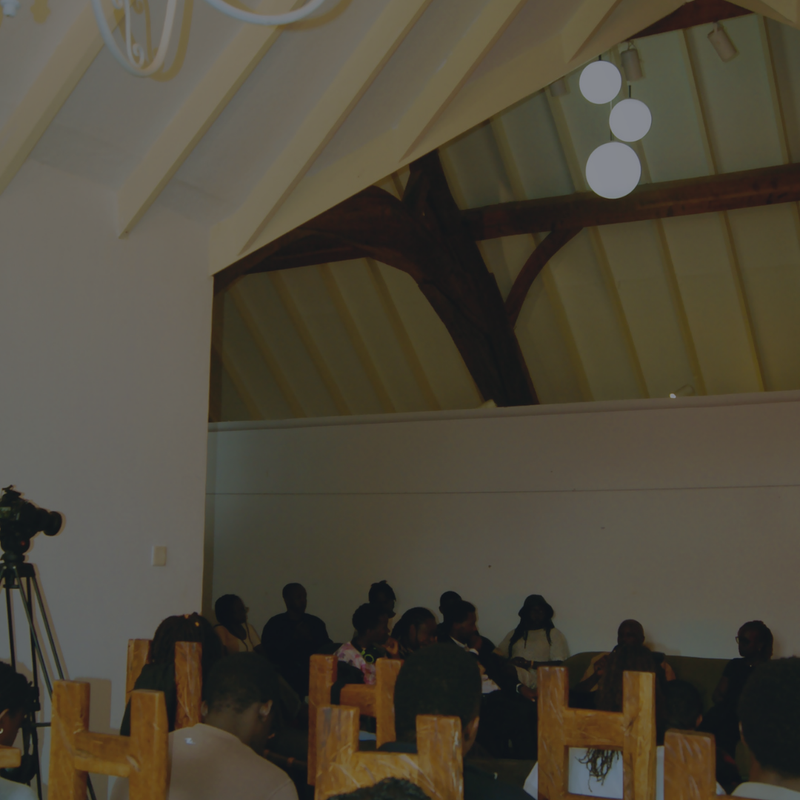
Creatives live to express themselves. That is our mission in this world. It could be argued that it is the primary instinct of all human beings. Expressing our emotions, ideas, thoughts, jokes and opinions are vital cogs that drive the human experience. However, as I sat through the panel talk listening to the speaker go on a thirty minute tangent about his creative vision for his personal brand, all I could think to myself was, “Wasn’t this a panel talk about financial development for creatives? Why can’t he be real with us for a second and tell us how long he had to pay people with free merch before he could make enough money to pay his talent what they were worth? How did he overcome that?” This had already been a two hour session that wiggled around the main topics of discussion and left us listening to someone’s origin story for the upteenth time. While the nuggets of wisdom might have been there, they were buried beneath 60 minutes of fillers and ramblings.
As it stands, it feels like panelers just show up. No homework, no guide. Just pure vibes and stories.
I don’t mean to sound so crude, but I think it’s important to be candid with how we approach panel talks. Observing how creative panel talks are usually conducted in Kenya has shown me that creatives desire an outlet to talk about their creations with full freedom. There is an ever-present desire of having a space where we can share about our creations and relish in the grand scheme of it all. That being said, panel talks aren’t the avenues for these conversations. Don’t get me wrong, I don’t think panel talks should die. (I had to use some hyperbole to keep you reading my meandering thoughts.) However, I don’t think they should remain as they are. I think an effective panel talk is one that possesses empathetic utilitarianism in its execution. Empathetic utilitarianism being the idea that a panel should maximise their collective experience to objectively benefit those who attended the panel talk in relation to the topic(s) being discussed, whilst employing an empathetic consideration of where someone is coming from. For example, an effective career panel talk should leave attendees with a stronger or clearer idea and conviction of what they want to do, what they don’t want to do or at the very least, a framework that helps them figure these two things out.
Empathetic utilitarianism brings me to my main point. Let’s bring back visualised presentations, engaging deep dives, researched examples and practical exercises to panels. As it stands, panel talks feel very laissez faire as panelers present their experiences without effective guidance tools to assist their listeners to understand concepts sufficiently. A good panel talk in my opinion is one that focuses on an active educational experience for the attendees. I might not have the right question to ask but a good teacher might draw it out of me through the tools and explanations he/she shares with the class. If the main topic of discussion is funding and capital sourcing, a good teacher would focus on the concept of crowd funding, good and bad loans, budget allocation and the sweet and bitter truths that surround the world of creative finance. I don’t want your personal story as the benchmark for your experience. I’d prefer it being used as a Socratic exercise that asks us questions of what went wrong and what went right.And so, this means that panelers need to do their own homework; applying themselves towards creating a short syllabus/framework for their segments. I understand two hours may be too short to elaborate on the complicatedmechanics of various creative fields. I am not asking for that. Not yet anyway. I’d prefer panelers approach talks like a single topic lecture, with the primary goal of breaking down one singular concept so well that almost everyone in class understands. A teacher and student’sdream. Panel talks aren’t expressive platforms, they are educational avenues. Creatives crave education. Since time immemorial, apprenticeship has been the core tenet of passing down creative skills and nurturing frezh and raw talents into mature and honed artists who profit off their masterpieces. We do not want the life story, we want the lessons of life. Do not tell us the journey, create a curriculum based on it so we can digest it. I think that starts with switching up the style and module; let’s incorporate presentations, active exercise, take away practices and guidance tools. Creative panel talk needn’t feel like corporate conferences, they need to feel like one big classroom buzzing with the exchange of wisdom, knowledge, and most importantly practice that can only be shared through practical experience. The creative craves education so that one day they may educate; this is art’s natural life cycle. Let’s approach it as such.