writers-pit
From Archive to Stage: How Pwani Tapes Transformed Kilele 2026
by Furaha Ruguru
April 15, 2026
writers-pit
You have one job. Create and perform four original songs in two weeks with an artist you have never met, from a completely different sociocultural background. That was the bold premise of the Pwani Tapes residency at Kilele Summit 2026.
Kilele is East Africa’s summit for music, tech and culture, bringing together folk and experimental musicians for a week of collaboration in Nairobi, Kenya. Its third edition in February 2026 hosted two Coastal musicians and one Nairobi producer for a two-week residency. The project, Amplifying and Remixing Coastal Music Heritage.
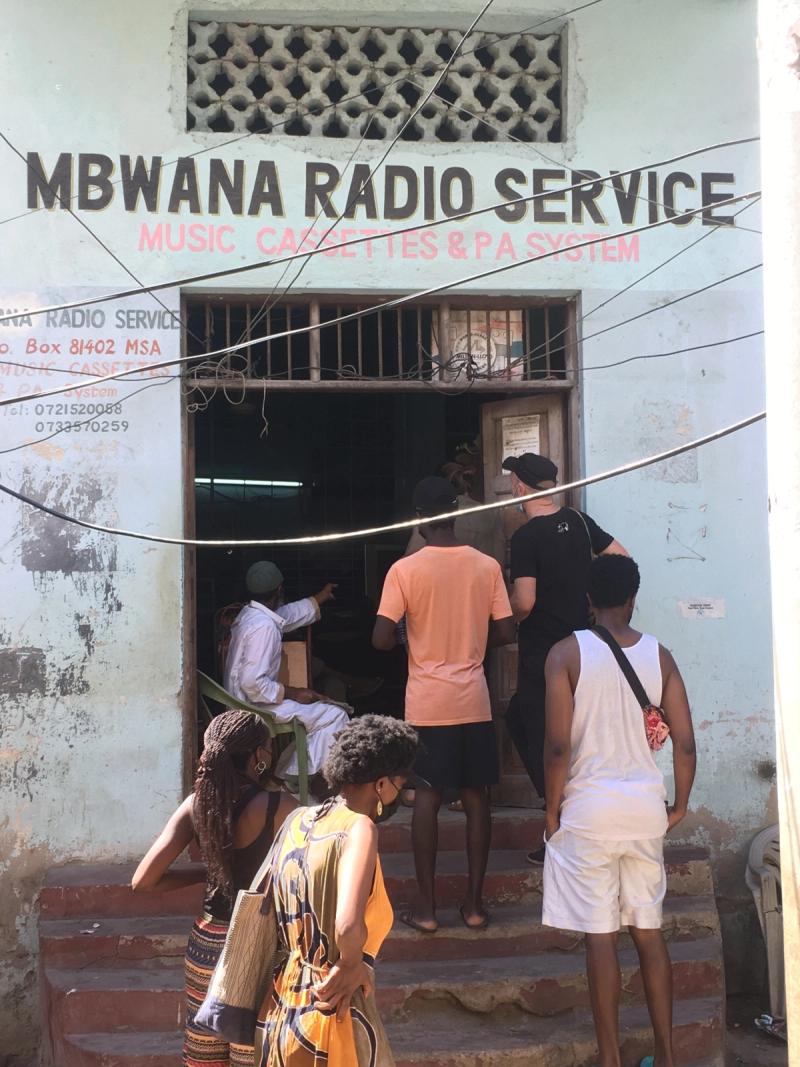
The first artist Mazera, is a Duruma mwanzele singer from Tsunza in Kwale County. Mwanzele is a hypnotic style of Mijikenda music that has long entranced communities along the coast. Beyond being a fisherman, Mazera has been singing since the 1990s, and recording with his band Mwanzele Muungano at Mbwana Radio Service since 1999.
Mrezi, also from Kwale, has been playing the marimba—the African xylophone—since he was 16. Twenty years later, he continues with Kenya Mtamwi, a distinctive style of marimba from the coast. Both artists have performed across Mombasa, Kwale and Kilifi counties, but had never played in Nairobi.
Then they met Hotkeys, “Horace on the Keys,” a self-taught music producer and DJ based in Nairobi. Selected through an artist open call, he brought 7 years of music production experience to the residency. His recent African dance music EP Waang’ gave him an advantage and prepared him for this moment.
But before we go any further, let's go back to the beginning.
What is Mbwana Radio Service?
Mbwana Radio Service was a legendary recording studio, cassette label and radio repair shop in Kibokoni, Old Town, Mombasa. From the late 1960s, it documented and disseminated Coastal Kenyan music particularly taarab, mwanzele and kayamba. But when its owner Mbwana Ali Shali died in 2022, so did the shop.
In 1995, Nassoro Mwinyi became the in-house librarian, carrying an incredible knowledge of the catalogue’s melodies, lyrics and artists. After the shop closed, he collected the cassettes and began digitising them before they deteriorated in Mombasa’s humid climate. Along the way, he connected with Alina, an African Studies graduate student from Berlin who stumbled into Mbwana during her research and kept returning for the music and conversations.
Together, they formed Pwani Tapes record label in 2024.
Before Pwani Tapes formally launched, they held a fundraiser with support from Santuri East Africa to kick-start the archiving and digitisation process. Held at Santuri Salon Nairobi on May 9th 2023, the event featured a panel discussion with Nassoro, cultural anthropologist Prof. Mwenda Ntarangwi and music historian Wairimũ wa Nduba of WerjoKenya.
https://www.instagram.com/reel/CsElviNoRDx/?utm_source=ig_web_copy_link
Nassoro revealed he had over 1000 cassettes to digitise. The goal? To preserve these Coastal sounds AND generate revenue for musicians who only recorded for the joy of being heard rather than financial gain.
With the support of a BraidFund grant by TICAH, they ran the Preserving Coastal Music Heritage project at the first Kilele Summit in 2024. It facilitated a performance by veteran musician Khonjo Kolio and his band from Malindi. During the opening night at Shelter KE club in Westlands, they performed the style zaire mkonyonyo—which has no direct connection to the Congo. Instead, it's a stripped-down Mijikenda sound with singing, dancing and mayanga (metal shakers).

During the summit, the Mijikenda musicians and taarab queen Zuhura Swaleh also met music lawyer Immaculate Juma who trained them on intellectual property and musicians’ rights. Kenyan videographer Karrl also presented a trailer for Mbwana Radio: Preserving and Amplifying Coastal Music Heritage, a short documentary spotlighting the cassette archive and the artists behind it.
https://youtu.be/DB_a2KbXBMY?si=3urb8TB6T0U_xWqb
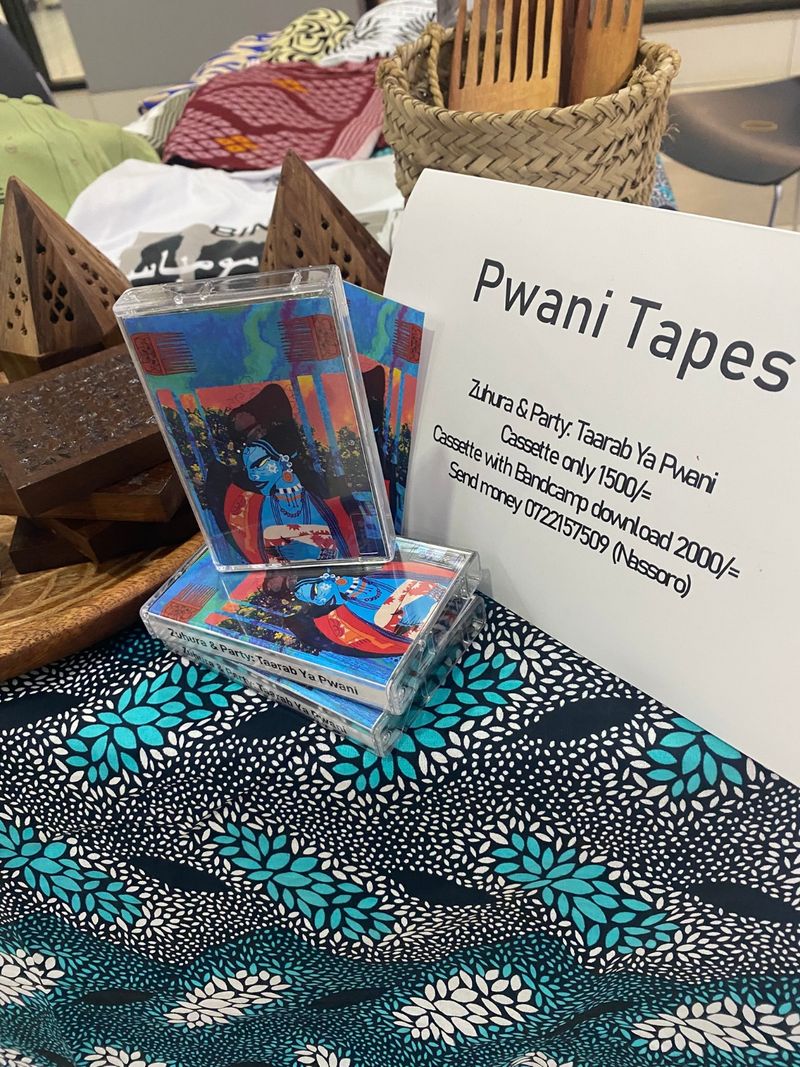
On January 15th 2025, after raising enough funds, Pwani Tapes finally released their first digitised project Taarab Ya Pwani. Engineered by Kenyan music producer Barno and accompanied by Nabalayo’s colourful artwork, the 9-track compilation showcased Zuhura and Party’s iconic taarab music. Poetic Swahili lyrics layered over drums and the delicate tashkota (Japanese harp).
Fun fact: Zuhura Swaleh had first been approached by Mbwana Ali Shali in 1972 to record after her taarab performances became wedding favourites.
But reissuing African music comes with ethical questions.
The ethics of reissuing African music
At Kilele 2026, Pwani Tapes hosted a panel on the ethics of reissuing. Moderated by Megan Iacobini de Fazio, it featured Nassoro Mwinyi, Sudanese researcher Izzo of Alrassa, and Matt Swallow of Baobab Studios, who record traditional Mijikenda music through their Lutsaga project.
Megan, Izzo, Nassoro and Matt
Pwani Tapes’ biggest challenge? Funding. Western organisations are willing to finance digitisation but often on the condition that tracks become open source and free to download. That blocks musicians from earning through sync and distribution deals.
Meanwhile, global industry players are racing to acquire catalogues from the Global South, including cassette archives. As Pwani Tapes noted on their Substack, vinyl from the Global South has largely been commodified. Now cassettes are the new frontier and entire catalogues risk being swallowed through one-off buyouts.
This goes against Pwani Tapes’ ethos. From the beginning, Nassoro has wanted the music to remain accessible in Mombasa first, while reaching new audiences globally. And to generate income for musicians who never got remunerated in the first place.Still, there was hope. Tamasha Records, based at The Mall Westlands and home to one of the largest archives of old-school African rumba, shared advice on distributing and monetising heritage catalogues without losing ownership. Tips that Pwani Tapes can implement on their independent journey.
Experiencing Mwanzele in Nairobi
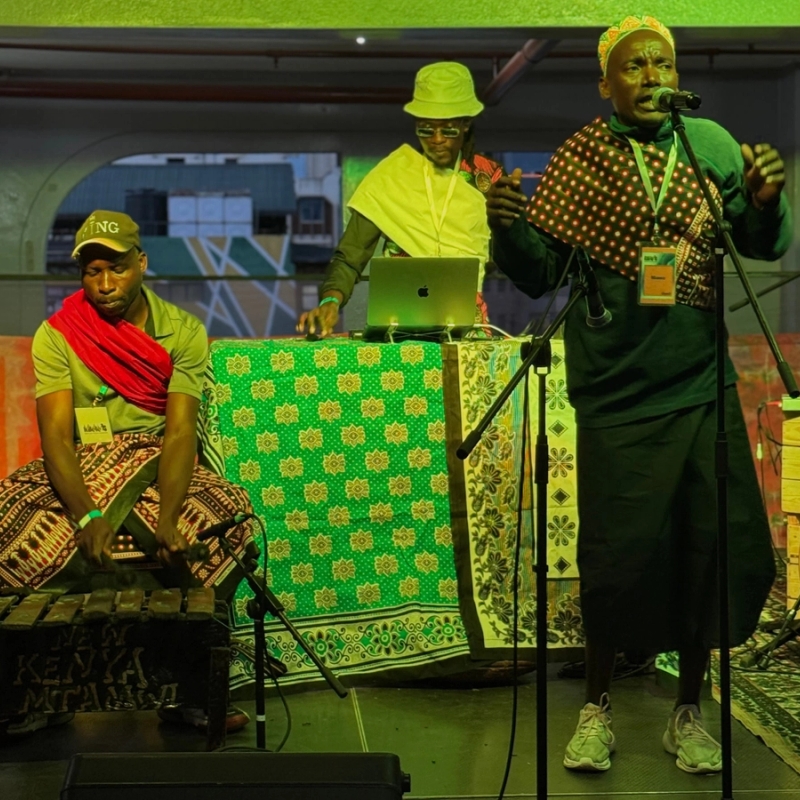
Now back to the residency. After recording at Santuri Studio at The Mall and creating four original tracks, the trio debuted them at Kilele’s Friday night showcase. Dressed in matching kangas, Mrezi played the marimba, Mazera sang in Duruma, and Hotkeys layered bass and drums from his laptop. At certain points, he blew a whistle to signal the song’s end - because Mazera could sing forever. “And also to add spice,” he shared with a smile.
https://www.instagram.com/p/DVa5kScjOvh/?igsh=cHl4bThzMnQzZHF2
The mwanzele party in a Mall parking lot moved Kileleans into a duara - a counterclockwise circle of dance that binds the community. The first time many experienced a mwanzele performance in Nairobi. And one track pulsed faster than the rest, perhaps echoing Ramogi, a Luo dance style.
In the tracks, you also could hear the uteo (a winnow laced with broken glass) and ndema (a metal ring) conversing rhythmically. Mazera and Mrezi experienced recording in a modern studio and following tempo grids. Meanwhile, Hotkeys learned to always keep the call-and-response of the traditional instruments intact when fusing them with electronic beats, as they speak to each other.
After an electrifying performance, Pwani Tapes plans to release this new fusion project. All that remains is a band name.
The future of Pwani Tapes
What next? Post-Kilele, Pwani Tapes intends to digitize and reissue more coastal music while partnering with collaborators who are not extractive - but care about preserving and amplifying Coastal heritage while benefiting the original artists.
Such collaborations include Lulu Khalef, founder of Pwani Club in Old Town Mombasa which stocks coastal crafts and modern Uswahili reimaginations. She's been documenting the journey and even displayed the limited-edition Taarab ya Pwani cassette at Kilele Summit. All fifteen copies sold out. The digital version is still available on Bandcamp.
From archiving fragile cassettes in humid Old Town to staging a mwanzele performance in a Nairobi parking lot, the mission remains clear: preserve, amplify, and return value to the source.
Because sometimes, you really do have one job.
Photos by Santuri East Africa