guests-pit
Baptism by Bass
by Winnyanne
November 09, 2026
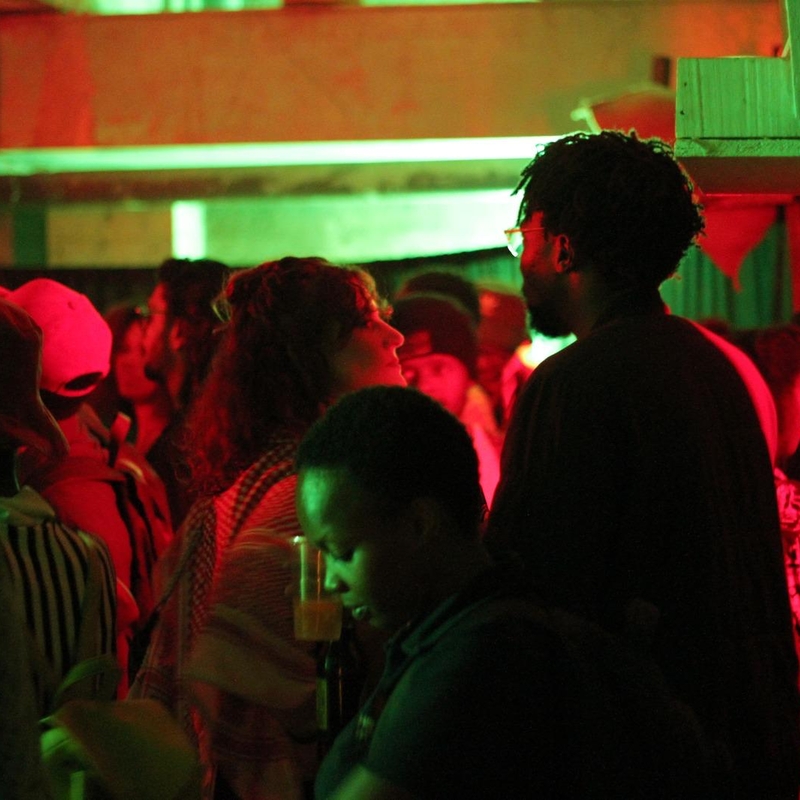
guests-pit
It was my first day being single, and like every life-changing experience, I was undergoing a catharsis. My old life was slowly drifting away from earth. So ideally, I wanted to walk on hot coals, run a marathon, summit Kilimanjaro, fight a lion, eat a whole cow, sing until my voice disappeared. I wanted, desperately, to exist outside myself. To feel something. Anything other than the swelling in my throat.
So I went on Google and searched, "bungee jumping near me." But Sagana seemed too far. I needed to feel something soon. As if the universe was listening, a DRK Room poster appeared on my Instagram FYP.
YOU SHAPE THE VOID.
BRING YOUR FREAKNESS & FREEDOM.
SAFE SPACE FOR YOU ALL.
COME IN YOUR OWN SKIN.
NO PHONES.
NO JUDGMENT.
AUTHENTIC AND INTELLIGENT SOUND OF TECHNO.
The lineup meant nothing to me.
Theo Nasa (UK).
Budalagi.
Nyx.
Maria.
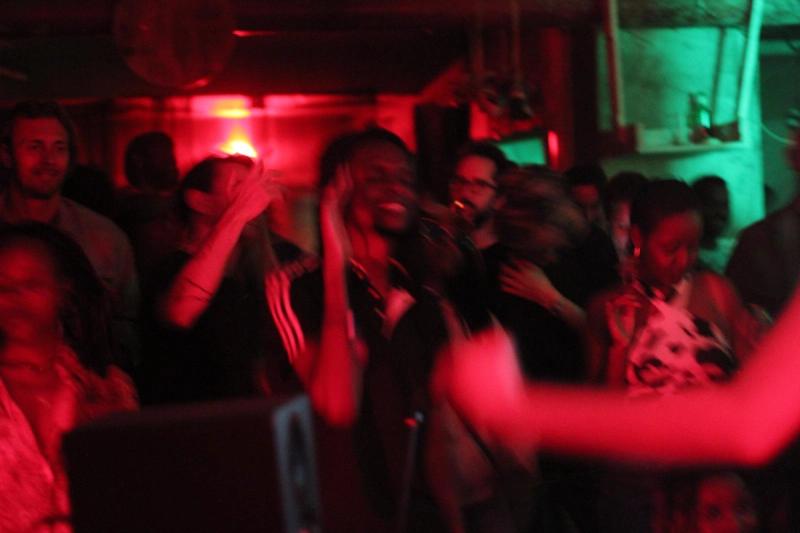
I didn't know who they were, but something about the invitation felt honest.
I wanted to dance.
Not casually dance. I wanted to dance completely. The kind of dancing where your body feels possessed by an ancient spirit. Like the Hindu god, Shiva Nataraja has taken over your entire being. I messaged the only mutual I had who followed DRK Room. He wasn't doing anything that Sunday.
"Why not?" he replied.
A few hours later I was standing in a dark room full of strangers, jumping from side to side.
Nobody stared. Nobody laughed. Nobody cared whether I knew how to dance or not. For the first time in a very long time, I existed without performing.
It was my first time really hearing techno and somehow, by sunrise, I had become someone else. I left that dance floor feeling lighter than I had in months. For a few hours, my trauma had not been the loudest voice in the room. My heartbreak had not been the center of my universe. I was simply a body moving through sound.
And in fear of sounding blasphemous, I'll say this very gently.
It felt like baptism.
I didn't understand why that night had such a profound impact on me until much later. It turns out my healing had a history.
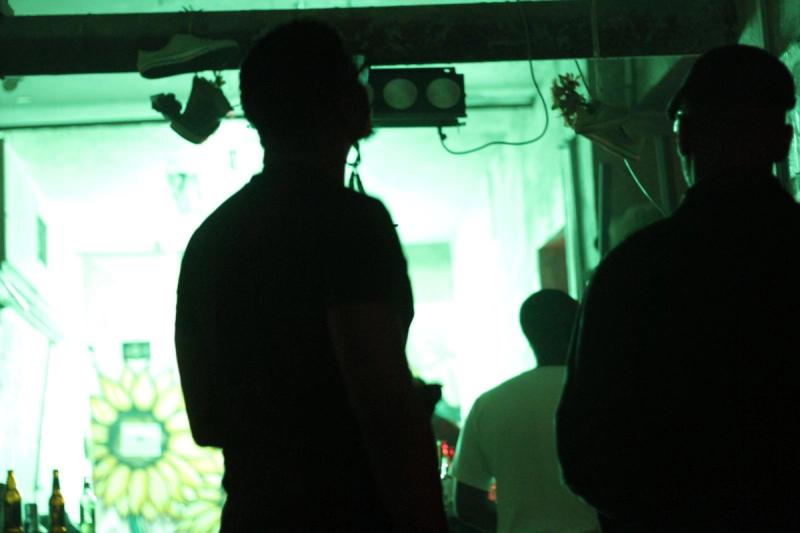
So as to understand why a dark underground room in Nairobi could feel strangely sacred, you have to travel nearly 13,000 kilometres away to one of the major industrial hubs in America, Detroit in the early 1980s.
Detroit, like me, was grieving. Factories that had once employed hundreds of thousands of workers were shutting down. Entire neighbourhoods were hollowing out. The city that had built the automobile was struggling to imagine its own future.
Out of that uncertainty came three young Black musicians; Juan Atkins, Derrick May and Kevin Saunderson, later known as the Belleville Three. Experimenting with synthesizers, drum machines and sequencers, they fused the funk of Parliament-Funkadelic with the electronic precision of Kraftwerk, creating music that sounded unlike anything before it. Creating Techno.
It was futuristic. Cold. Mechanical. Hypnotic.And although Techno was highly technological and forward-looking, its physical home was rooted in underground nightlife. Because mainstream venues rejected this experimental sound, it was embraced by marginalized Black and queer communities who sought alternative spaces to dance, escape and exist freely. DJs like Ken Collier played the early Techno tracks at local gay clubs and introduced the music to audiences that championed its futuristic and rebellious spirit.
Then the music crossed the Atlantic and found another city in transition.
Berlin.
When the Berlin Wall fell in 1989, and post-Cold War Germany reunited the following year, abandoned bunkers and power plants in the industrial East and the capitalist West Berlin became temporary autonomous zones. These abandoned spaces became radically inclusive sanctuaries for queer people, artists, punks, immigrants and young Berliners eager to reinvent themselves after decades of division. Clubs like Tresor and later Berghain carried forward an ethos rooted in inclusivity, sexual freedom and underground culture, creating spaces where identity mattered less than surrendering to the music.
Techno became the soundtrack of reunification, and soon people were dancing where borders once stood.
This pattern repeats itself throughout history. Whenever societies fracture, people gather around music, seeking, however briefly, a way to survive reality.
Now there I was at Santuri, sipping my non-alcoholic beer, toes gripping my soles, soles gripping the floor, the bass pressing against my chest as my body surrendered to it. Smoke from the smoke machine swirled through the room, drawing me deeper toward the dance floor. I was at The mall. I was in Nairobi. I was in Kenya. But for a moment, I was in heaven.
Kenya's relationship with Techno is younger, but no less remarkable. Techno arrived in Kenya quietly. Long before it filled underground spaces and clubs, it lived on the margins of Nairobi nightlife, sustained by small collectives, visiting DJs and devoted enthusiasts. While mainstream clubs gravitated toward hip-hop, dancehall, genge and Afrobeats, electronic music found homes in forests, rooftops, parking lots and temporary venues where the crowd gathered as much for community as for sound.
During the 2000s and early 2010s, electronic dance music gained visibility through promoters such as 6AM Kenya, whose events introduced international DJs and cultivated a local audience. The scene remained relatively small, shaped largely by expatriates, tourists and a niche community of Kenyan fans.
Today, communities like DRK Room, TCHNO, Temple and Magma continue that tradition, where the music is only part of the experience. The rest is the people. These spaces aim to build community. And true to their intentions, Nairobi has created spaces where strangers trust one another enough to dance without pretending. Where no one cares who you are and what you have to offer. The assumption is simple: if this music speaks to you, you already belong.
After my first rave, I became a reluctant evangelist. Not because everyone should like techno. They shouldn't. Music is personal. But because everyone deserves a place where they don't have to audition for acceptance.
One thing people misunderstand about raves is who goes to them.
Walk into almost any dance floor in Nairobi and you'll find doctors, engineers, accountants, teachers, artists, software developers, architects, lawyers and students sharing the same room. Outside, many of them carry titles that demand composure. Inside, they are simply people moving to music.
Another misconception is that you need drugs.
You don't.
Some people drink. Some don't. Some use drugs. Many don't. The only thing everyone has in common is the decision to surrender to the music for a few hours.
If it's your first rave, carry less than you think you need. A fanny pack with your house keys and phone is enough. Drink water. Respect people's boundaries. Don't touch someone who hasn't invited you to. Look after your friends. If you can, look after strangers too. Dance floors work because everyone quietly agrees to take care of one another.
And then, dance.
Really dance.
Dance until your inner critic gets tired and goes home before you do.
We have somehow convinced ourselves that healing must always be quiet. That it belongs in therapists' offices, church pews, meditation retreats and journals. And all of these places matter but healing can also be loud. Sometimes it arrives at 138 beats per minute. Sometimes it wears combat boots. Sometimes it wears mesh. Sometimes it is surrounded by lasers, smoke machines and strangers whose names you'll never learn. Sometimes all it asks of you is to move.
I still can't explain exactly what happened to me that first night. Maybe there is nothing to explain. Maybe the point was never the music itself. Maybe it was permission.
Permission to exist without performing.
Permission to grieve without speaking.
Permission to become someone new without first asking for forgiveness.
Now when people ask me why I rave. I usually smile and say, "Because it's fun."
That is true.
But it isn't the whole truth.
The whole truth is that I walked into DRK Room carrying heartbreak and walked out carrying myself. And perhaps that is what techno has always been, a way of finding your way back to life.